
Elastomer materials guide
We supply O-rings and custom molded shapes in dozens of elastomer compounds. Below are the most common families and where each fits. Ranges are general guidance; the compound data sheet and your specification govern.
Nitrile (NBR, Buna-N)
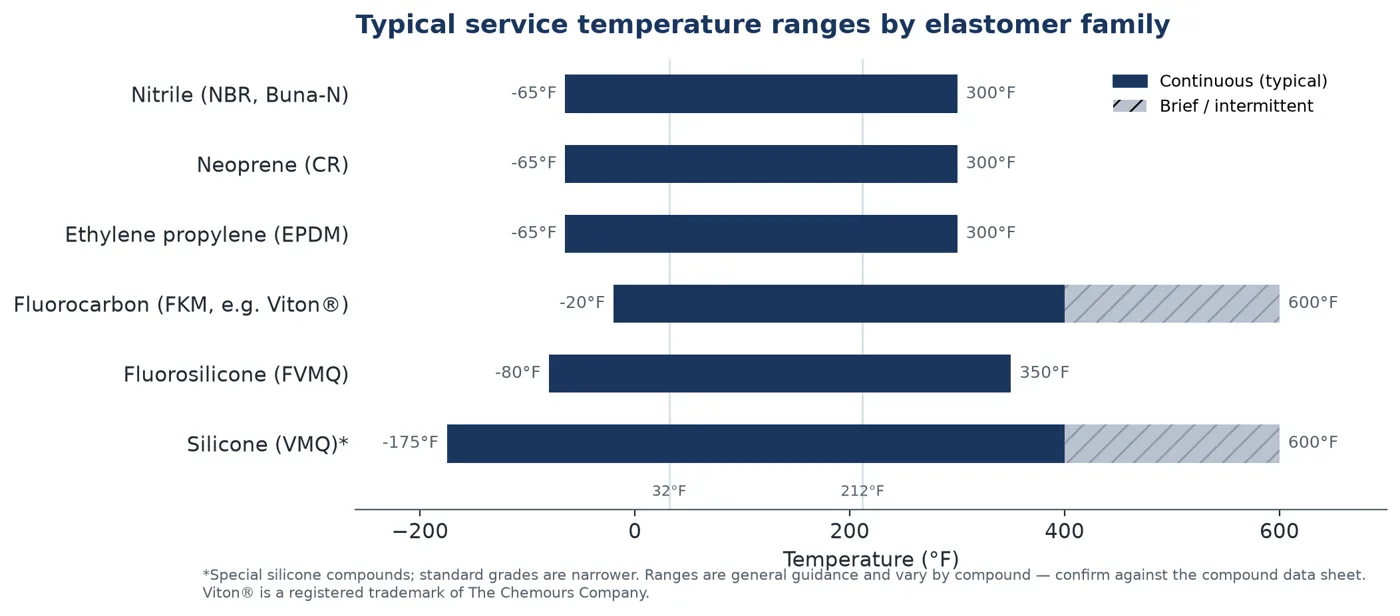
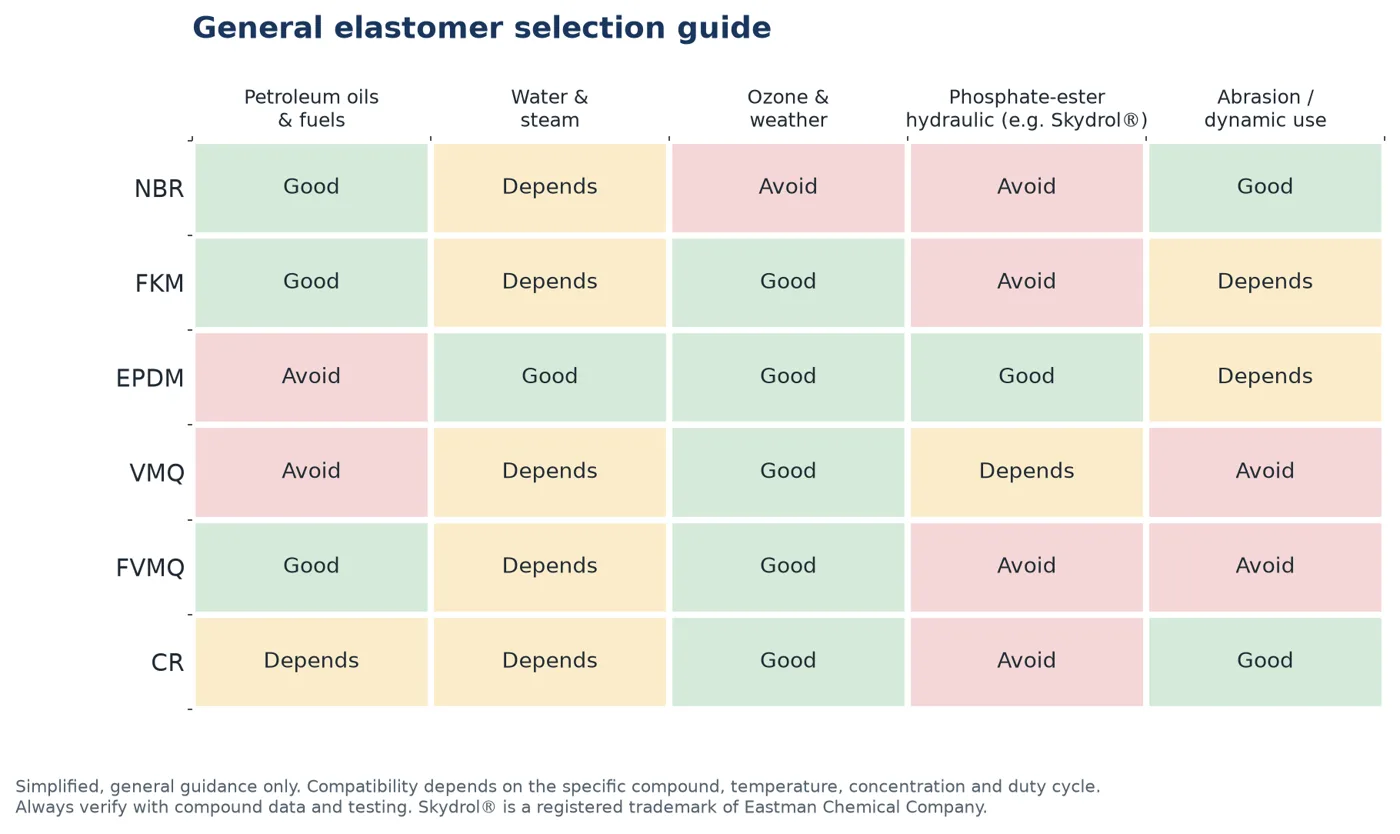
The most versatile elastomer, with excellent resistance to most petroleum oils and fuels. Typically compounded for about -65°F to +300°F. Good compression set, tear and abrasion resistance; poor resistance to ozone, sunlight and weathering.
Fluorocarbon (FKM, e.g. Viton®)
Combines compression-set resistance, high-temperature capability and broad chemical resistance. Typically about -20°F to +400°F, with brief intermittent exposure to +600°F. A common upgrade from nitrile where heat or chemicals are a problem.
Ethylene propylene (EPDM, EPR)
Excellent resistance to water, steam, alcohols, engine coolants, sunlight and weathering, and to phosphate-ester hydraulic fluids such as Skydrol®. Typically about -65°F to +300°F. Not recommended for petroleum oils or fuels.
Silicone (VMQ)
Excellent at temperature extremes: special compounds reach -175°F flexibility or +600°F heat resistance. Usually used in static seals because of lower tear and abrasion resistance; common in medical products, electrical apparatus and dry-air service up to about 400°F.
Fluorosilicone (FVMQ)
Silicone's high and low temperature performance with much better fluid resistance. Common in aircraft fuel systems. Typically about -80°F to +350°F.
Neoprene (CR, chloroprene)
Resists weathering and petroleum lubricants, with good flex and tear resistance. Typically about -65°F to +300°F. Common in refrigerant seals.
Viton® is a registered trademark of The Chemours Company. Skydrol® is a registered trademark of Eastman Chemical Company.
Many other compounds are available. Tell us the fluid, temperature, pressure and any specification callouts and we will recommend a compound.